Susan Middleton:
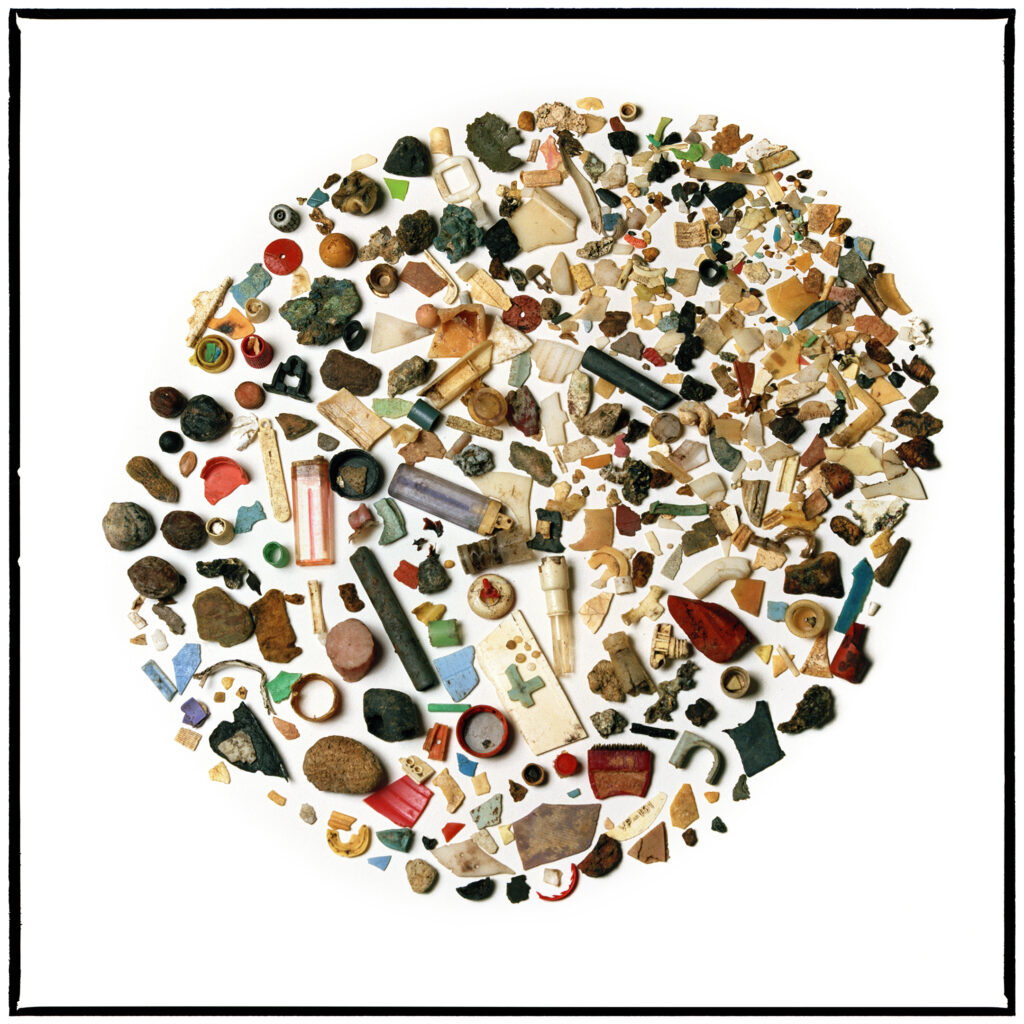
Albatross Stomach Contents, 2005
Susan Middleton is a California-based photographer and author specializing in the portraiture of rare and endangered animals, plants, sites, and cultures. This image is part of a series of photographs she took in collaboration with artist David Liittschwager.
The photo depicts an albatross chick the artists observed while staying in Kure Atoll. They named the chick Shed Bird. Shed Bird was discovered dead on morning. The feathers were separated and the chest cavity was sliced open, exposing a huge, lumpy proventriculus (stomach) that was perforated. The proventriculus was cut open, exposing plastic – a sharp rectangular piece causing one of the perforations, two disposable cigarette lighters, several bottle caps, an aerosol pump top, a piece of a shotgun shell, broken clothespins, toys, and more.
In total, Shed Bird’s proventriculus was stuffed with 12.2. ounces of plastic and other indigestible material, which led to malnutrition, dehydrations, and eventually death. This image shows the complete contents of Shed Birds stomach, arranged on a sheet of white plastic.
Albatross chicks eat what their parents feed them, plastic included. Albatrosses feed on the surface of the water, they do not dive for their food. For tens of thousands of years, albatrosses have foraged where ocean currents come together, feeding on flying fish eggs attached to pieces of floating pumice and driftwood, as well as squid which are driven to the surface by sharks and other large predators. Only in the last fifty years has plastic accumulated where these currents converge, and albatrosses mistake the plastic for food. The currents that concentrate food at the surface bring in plastics as well: pieces of shotgun shells, paintbrushes, pump spray nozzles, toothpaste tube caps, clothespins, buckles, toys, just to name a few. If plastic debris ends up on a beach, or in a river, it may eventually wash out to sea, joining the plastic dumped from ships. Over time plastic becomes brittle in sunlight and breaks into smaller and smaller shards. For every pound of naturally occurring zooplankton in the North Pacific’s subtropical gyre, there are six pounds of plastic.